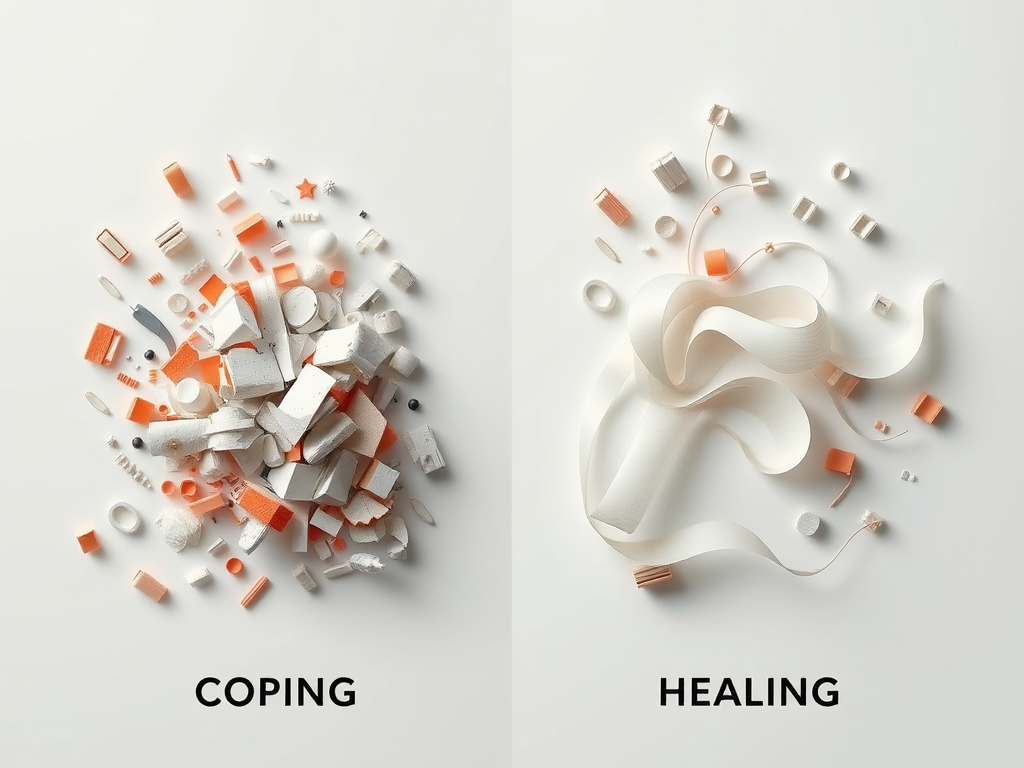
Life brings challenges that test our strength, patience, and emotions. When pain shows up—whether from loss, trauma, or stress—we naturally search for ways to handle it. That’s where coping and healing come in. Although they may sound similar, they’re very different parts of the emotional journey.
Both are important—but knowing the difference helps you recognize where you are in your process and what you need next.
What It Means to Cope
Coping is about getting through the day. It’s the act of managing stress, numbing pain, or finding temporary relief when life feels overwhelming. Coping helps you survive, but it doesn’t always help you recover.
Healthy coping can look like:
- Taking a walk or meditating when you’re anxious.
- Distracting yourself with music, a movie, or friends.
- Using deep breathing or grounding exercises to calm down.
- Journaling to release emotions.
Unhealthy coping might include avoidance, overworking, or suppressing emotions. These strategies can help you feel better in the short term, but they don’t address the root of the pain.
Coping is necessary—it’s your emotional first aid. But it’s not meant to be permanent.
What It Means to Heal
Healing goes deeper. It’s the process of facing, understanding, and releasing what’s been holding you back. Healing takes courage, self-awareness, and patience. Unlike coping, it’s not about getting through—it’s about moving forward.
Healing involves:
- Allowing yourself to feel emotions without judgment.
- Processing your pain through therapy, reflection, or support.
- Forgiving yourself and others.
- Creating new patterns that align with peace and growth.
Healing can be uncomfortable because it requires vulnerability and honesty. But over time, it transforms your wounds into wisdom.
The Balance Between Coping and Healing
We need both coping and healing. You can’t heal without first learning how to cope, and you can’t keep coping forever without beginning to heal. Coping stabilizes you; healing restores you.
Sometimes, you may move between the two. Some days are for surviving—others are for growing. The key is to know when it’s time to stop numbing and start nurturing.
How to Move From Coping to Healing
If you’re ready to take the next step in your journey, here are some ways to begin:
- Acknowledge your pain – Healing starts when you stop pretending everything is fine.
- Seek support – Therapy, community, or trusted friends can guide your process.
- Create space for reflection – Journaling, mindfulness, or quiet time can help you uncover patterns.
- Be patient – Healing takes time and isn’t linear. Progress can look slow, but every small step matters.
Final Thoughts
Coping keeps you afloat; healing teaches you how to swim. One is about survival, the other about transformation. Both are valid, both are brave, and both deserve compassion. Wherever you are—coping, healing, or somewhere in between—remember that you are doing your best. And that’s enough.
💬 Join the Conversation
Are you in a season of coping or healing right now? What helps you move from one to the other? Share your thoughts and experiences in the comments below.
 Urban Pulse Magazine
Leave a comment